The Real Pain Point of Retail Activation: Why Your Brand Needs a “Retail Activation Architect”
Recently, a profound observation shared within our industry strongly resonated with us:
“Retail activation programmes rarely fail because of creativity. They fail because the system behind them hasn’t been designed properly.”
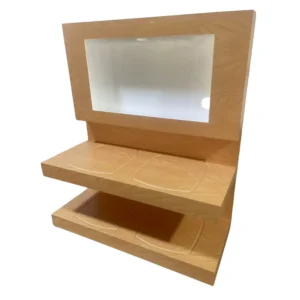
A global rollout often involves multiple manufacturing facilities, dozens of suppliers, complex logistics networks, and installation across hundreds or thousands of stores. Usually, creative teams, procurement teams, and project managers work in their own silos. Each part may work in isolation, but if the system connecting them isn’t aligned, the programme becomes slow, expensive, and unpredictable.
In today’s retail display industry, everyone focuses on the aesthetics of the fixture, but very little focus is placed on the architecture behind the activation itself. What the market truly needs is not just another display factory, but a “Retail Activation Architect.”
As veterans in the retail display sector, this is exactly the role we play. We don’t just bring visionary creativity to life; we are responsible for designing how supplier ecosystems, manufacturing networks, and rollout systems actually work together. We seamlessly integrate cutting-edge technology into physical displays, ensuring they scale perfectly and are delivered flawlessly to every store worldwide.
When Displays Meet Technology: Reshaping the Retail Interactive Experience
Traditional displays are merely static fixtures. But in the hands of an “Architect,” a display becomes a smart terminal connecting brands with consumers. By deeply embedding RFID (Radio Frequency Identification) and AI (Artificial Intelligence) technologies into our display systems, we ensure your products aren’t just “seen” but truly “experienced.”
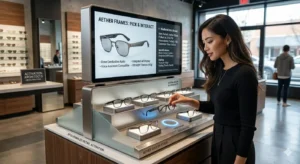
In a recent global display project for a renowned smart glasses brand, we introduced a hidden RFID induction system.
Seamless Interaction: Each pair of glasses is equipped with an invisible RFID tag, with readers built directly into the display stand. The moment a customer picks up a specific pair of smart glasses, the high-definition screen responds in milliseconds, automatically playing the product’s feature highlights, tech specs, and styling videos.
Data Insights & Analytics: Even more valuable is the backend system, which records which glasses are picked up most frequently and held the longest. The display is no longer just a presentation tool; it’s an offline “data collection hub” capturing consumer behavioral preferences.
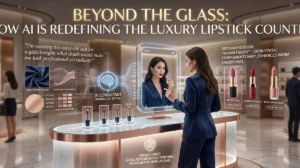
The core of beauty retail is the “try-on” experience. For our lipstick display stands, we integrated AI facial recognition and AR try-on technologies.
Smart Recommendations: The display is equipped with an AI smart-sensing mirror. When a customer approaches, the AI camera accurately captures facial features and identifies their skin tone (e.g., cool, warm, or neutral). It then instantly recommends the most flattering trending lipstick shades on the screen.
What You See is What You Get: Customers can experience a millisecond-level virtual try-on via the screen without removing their makeup. This significantly boosts engagement and conversion rates while drastically reducing the cost and hygiene concerns of physical testers.
The Invisible Moat: A “Flawless Delivery System” from Factory to Store
As the original quote points out, no matter how stunning a smart display is, if the system behind it cannot scale, the activation fails.
Smart displays equipped with screens, AI cameras, RFID chips, and precise cabling are far more fragile and complex than traditional wooden or metal fixtures. As your Retail Activation Architect, we don’t just design the display itself; we design the logistics architecture to ensure perfect delivery:
Modular Pre-Assembly: We complete all core electronic component pre-assembly and aging tests at our factory. By “modularizing” complex systems, we ensure that once the display arrives at the store, staff simply need to plug and play, completely eliminating the pain point of complicated in-store installations.
Military-Grade Custom Shockproof Packaging: For the fragile nodes of smart displays (like screen edges and AI camera gimbals), we conduct 3D stress modeling to design custom EPE (Pearl Cotton) or EVA shock-absorbing inserts. Before finalizing any packaging, it must pass rigorous ISTA international standard drop and vibration tests.
Full-Chain Logistics Tracking: We have integrated mature global logistics networks. Whether it’s shipping to a mega-flagship store in New York or a boutique counter in Paris, we ensure these high-value smart assets arrive moisture-proof, collision-free, on time, and completely intact.
Conclusion: Aesthetics are Just the Beginning; the System Determines Success
What shoppers see in the store is the stunning AI virtual try-on and seamlessly responsive RFID smart glasses displays. But what determines whether these experiences can scale smoothly across hundreds of stores is the robust “activation system” behind them.
We refuse to be mere movers of aesthetics. We are committed to being your Retail Activation Architect, empowering displays with technology and guaranteeing successful rollouts with a rigorous system.
If you are looking for a partner who can flawlessly integrate complex technology into retail displays while providing worry-free global delivery, please reach out to us. Let’s build the next traffic-driving retail space together.
The Art of Affordable Luxury: Why Smart Retailers Are Swapping Wood & Metal for High-Tech Acrylic
Introduction: High-End Aesthetics on a Tight Economy Budget
In the current global economic climate, retailers face a difficult paradox. On one hand, competition is fiercer than ever, requiring breathtaking window displays and luxurious in-store environments to attract customers. On the other hand, budgets are tightening. Brands are reluctant to spend massive amounts of CAPEX (Capital Expenditure) on seasonal fixtures like they used to.
So, how do you maintain a “High-End” brand image while cutting costs?
At Custom Display Works, we believe the answer lies in Value Engineering. By leveraging advanced manufacturing technologies, we are helping luxury brands swap out expensive, heavy materials for a versatile hero: Acrylic.
Here is why switching to specialized acrylic solutions is the smartest move for your next retail rollout.
1. Visual Deception: Wood Grain You Can Actually Feel
In the past, “faux wood” meant cheap-looking plastic laminates. Those days are over.
Using state-of-the-art UV Flatbed Printing technology, we can now replicate the look of premium timber—Walnut, Oak, Mahogany—on acrylic sheets with stunning accuracy. But we don’t just print the color; we print the texture.
By layering UV ink, we create a 3D embossed effect. When your customers run their hands along the display, they feel the grain, the knots, and the organic imperfections of real wood. It provides the warmth of timber without the high cost of raw materials or the risk of warping due to humidity.
2. The Midas Touch: Metallic Finishes Without the Weight
Brass, gold, and stainless steel are staples of luxury design, but they are incredibly expensive and heavy.
Through Vacuum Metallizing (Electroplating), we can transform transparent acrylic into a mirror-like metallic masterpiece. Whether you need Champagne Gold, Rose Gold, or Chrome Silver, the finish is indistinguishable from solid metal to the naked eye.
Cost Efficiency: You achieve the “million-dollar look” for a fraction of the price of solid metal fabrication.
Lightweight: Metal fixtures are a nightmare to move. Metallized acrylic is lightweight, allowing your store staff to easily rearrange floor layouts without needing a logistics crew.
3. The Hidden Benefit: Hassle-Free International Shipping
This is a critical point for brands importing displays from China.
Real wood is subject to strict international regulations. To export wooden displays, the material must undergo fumigation and meet ISPM 15 standards to prevent pest infestation. This process is costly, time-consuming, and carries the risk of customs delays.
Acrylic bypasses this entirely. As a synthetic material, it requires no fumigation and faces fewer inspection hurdles. By choosing wood-effect acrylic, you are not just saving money on materials; you are ensuring your supply chain moves faster and your displays arrive on time for your launch.
4. Innovation: The “Backlit Wood” Effect (Bonus Feature)
Here is something real wood simply cannot do.
Because acrylic is inherently transparent, we can control its opacity. We can print a wood texture that looks solid when the lights are off, but allows light to pass through when back-lit. This allows for glowing logos or illuminated shelving units that appear to be made of “magic wood.” This unique visual merchandise element creates a “Stop and Stare” moment that real timber cannot achieve.
5. Safety and Durability in High-Traffic Zones
In a busy retail environment, accidents happen.
Glass shatters and poses a liability risk.
Soft Wood dents and scratches easily when hit by shopping carts or cleaning equipment.
Acrylic (PMMA) is 17 times stronger than glass and highly resistant to impact. It offers the durability needed for high-traffic zones while protecting your brand’s pristine image longer than softer organic materials.
Conclusion: Don’t Compromise, Optimize.
Cutting the budget doesn’t mean you have to “look cheap.” It just means you have to be smarter about materials.
For brands that change displays seasonally, spending a fortune on solid wood or heavy metal is no longer sustainable. With UV-printed textured acrylic and metallized finishes, Custom Display Works offers you the best of both worlds: the luxurious aesthetic your brand demands, and the cost savings your finance team needs.
Ready to value-engineer your next project? Contact Custom Display Works today for a sample kit. You won’t believe it’s not wood.
Beyond the Glass: How AI is Redefining the Luxury Lipstick Counter
Beyond the Glass:
How AI is Redefining the Luxury Lipstick Counter
In the world of luxury retail, the “Display Stand” has long been a static silent salesman. It relied on lighting, branding, and the physical allure of the product to capture attention. But today, a quiet revolution is happening. By integrating Large Language Models (LLMs) and Augmented Reality (AR), the humble lipstick counter is evolving into an intelligent, empathetic, and highly personalized beauty consultant. Here is how AI is pushing the boundaries of retail innovation.
1. From Static Displays to “Living” Consultations
The most significant leap in innovation is the shift from “selection” to “consultation.” Traditionally, a customer would browse shades manually. With modern APIs like Gemini 2.0 or GPT-4o, the display stand now has a “brain.” Instead of just clicking a color, a customer can ask: “I’m wearing this navy silk suit for a gala tonight; what shade would make me look professional yet radiant?” The AI analyzes the fabric’s texture, the customer’s skin undertones, and the current lighting to provide a tailored recommendation. This isn’t just a screen; it’s a high-end service experience.
2. The Power of “No-Code” AI Integration
One of the biggest misconceptions in retail tech is that a brand needs to build its own AI from scratch. The true innovation lies in API Orchestration. By connecting existing, world-class engines—such as Perfect Corp for AR rendering and ElevenLabs for elegant voice synthesis—brands can deploy “Luxury AI” in weeks rather than years. This allows heritage brands to focus on what they do best—aesthetic and quality—while leveraging the world’s most advanced algorithms for the “digital brain.”
3. Privacy-First: Innovation through De-identification
As technology becomes more invasive, luxury must remain synonymous with safety. The next generation of display stands innovates through Privacy by Design. Rather than uploading a customer’s face to the cloud, smart stands now use “local feature extraction.” The device identifies the HEX code of the user’s skin tone and the RGB values of their outfit locally. Only these mathematical parameters are sent to the AI. This creates a “Private Luxury” experience where the customer gets personalized advice without ever worrying about their biometric data leaving the counter.
4. The “Magic Mirror” Effect
Innovation is also found in the visual fidelity of AR. Today’s AI-driven displays can simulate the exact texture of a lipstick—be it matte, satin, sheer, or metallic. By tracking the user’s lips with sub-millimeter precision, the “Virtual Try-On” feels like a magic mirror. It removes the hygiene concerns of physical testers while providing an instant, “Insta-ready” visual gratification that drives immediate sales.
Conclusion: The Future is Conversational
The display stand of the future is no longer a piece of furniture; it is a service touchpoint. By combining the analytical power of LLMs with the visual magic of AR, luxury brands can provide a bespoke, secure, and enchanting shopping journey. The glass is no longer a barrier—it’s a gateway to a personalized beauty world.
Bring Smart Display Innovation to Your Retail Stores
At Custom Display Works, we engineer and manufacture bespoke acrylic and metal display fixtures tailored for modern retail tech integration. Whether you need custom lipstick counters, LED-lit displays, or interactive POP stands, our team is ready to bring your design to life.
In the fast-paced world of retail, the “first glance” is everything. Brands are constantly searching for display solutions that are not only durable but also visually arresting. At Custom Display Works, we believe the future of retail design lies in the intelligent combination of materials.
While we specialize in traditional craftsmanship using metal, wood, and acrylic, there is a game-changer in our workshop: 3D Printing (Additive Manufacturing).
In this post, we explore how integrating 3D printed components into mixed material display racks is solving complex design challenges and speeding up the journey from concept to shop floor.
1. Rapid Prototyping: Seeing is Believing
Before we cut expensive hardwood or weld steel frames, we need to be sure the design works.
Traditional prototyping for mixed material racks can be costly and time-consuming, often requiring multiple molds or tooling adjustments. With 3D printing, we can produce a physical scale model or full-size specific components (like a complex joint or bracket) in a matter of hours.
The Benefit to You:
Speed: Reduce product development time by weeks.
Accuracy: Test the fit and function of different materials (e.g., how an acrylic shelf sits on a 3D printed bracket) before mass production.
2. Solving the “Connection” Challenge
The hardest part of building a mixed material display—for example, combining sleek metal tubing with rustic wooden shelving—is the connection point. Standard off-the-shelf connectors can look clunky and cheap.
3D printing allows us to design and manufacture custom connectors and joints that are invisible or stylized to match your brand. We can print complex geometries that hold metal, wood, and plastic together securely without visible screws or welding marks.
Example: Imagine a display stand featuring bamboo uprights and acrylic shelves. We can 3D print a custom friction-fit joint that seamlessly marries the two materials, creating a clean, modern look that traditional manufacturing cannot easily achieve.
3. Cost-Effective Customization for Small Batches
Not every client needs 10,000 units. Sometimes, you need 50 exclusive displays for a pop-up store or a seasonal campaign.Creating injection molds for plastic parts is incredibly expensive and only makes sense for mass production. 3D printing eliminates the need for molds entirely. We can print intricate branding elements, logo toppers, or product holders for a limited run of displays at a fraction of the cost.
4. Complex Textures and Branding
3D printing allows for a level of detail in texture that is hard to replicate with wood or metal.
Logos: We can print 3D dimensional logos that pop out from the display header.
Textures: We can mimic the texture of leather, woven fabric, or geometric patterns on specific parts of the display rack to enhance tactile engagement.
By combining these printed elements with the structural integrity of metal and the warmth of wood, your display becomes a piece of art rather than just a storage unit.
Conclusion: The Perfect Hybrid
At Custom Display Works, we don’t just use technology for the sake of it; we use it to enhance craftsmanship. 3D printing doesn’t replace our metal fabrication or woodworking skills—it elevates them.
By utilizing 3D printing for complex joints, prototyping, and intricate details, we deliver mixed material display racks that are stronger, smarter, and more stylish.
Are you ready to elevate your retail presence?
Whether you need a sleek POS display or a robust floor-standing rack, let us show you how a hybrid approach can bring your vision to life.
The Future of Luxury: A Symphony of Material and Craftsmanship
In the ever-evolving landscape of luxury retail, the ambiance of a brand’s physical space is as crucial as the products it houses. Today’s discerning clientele seeks more than just a purchase; they desire an immersive experience that speaks to the brand’s heritage, quality, and commitment to excellence. This has given rise to distinct trends in luxury brand displays, where the sophisticated use of high-end materials and an evolved sense of craftsmanship converge to create unforgettable brand narratives.
The Allure of Mixed Materials: The Rise of Metal and Acrylic
A prominent trend in luxury display design is the harmonious bleHybrid Designsnding of materials, with a particularly noteworthy combination being the fusion of metal and acrylic. ThiHybrid Designss pairing has gained significant traction for its ability to create a visually stunning and contemporary aesthetic while offering practical advantages.Hybrid Designs
The popularity of this hybrid approach lies in its perfect balance of strength and elegance. Metal, with its connotations of durability and timeless quality, provides a robust framework and a sense of gravatas. Finishes like brushed aluminum, polished brass, or matte black steel exude a sense of industrial chic and impeccable craftsmanship.
Acrylic, on the other hand, brings a touch of modern minimalism and lightness. Its crystal-clear transparency allows the product to be the hero, while its versatility enables the creation of sleek, seamless surfaces and innovative lighting effects. When backlit, acrylic panels can create a captivating glow, dramatically increasing the time customers spend engaging with the display. In fact, a European fashion house saw a 40% increase in dwell time after incorporating backlit acrylic panels with brushed stainless steel frames.
This combination is not merely about aesthetics; it’s a strategic choice. The metal frame enhances the durability of the more delicate acrylic, reducing the likelihood of damage in high-traffic retail environments and subsequently lowering replacement costs. This “multi-material” approach allows for quicker and more efficient installation of display fixtures. The contrast between the solid, opaque nature of metal and the transparent, ethereal quality of acrylic creates a dynamic visual tension that is both sophisticated and inviting.
Redefining Craftsmanship: A Return to the Tangible in a Digital Age
In an era of mass production, luxury brands are placing a renewed emphasis on craftsmanship, but with a contemporary twist. The new standard of craftsmanship extends beyond flawless execution and meticulous attention to detail; it now encompasses a brand’s ethical and sustainable practices.
Today’s luxury consumer is increasingly conscious of a product’s origin and environmental impact. There is a growing appreciation for artisanal skills and the narrative behind each creation. This has led to a resurgence in the celebration of handmade items, where the subtle imperfections tell a story of human touch and dedication. Luxury brands are responding by highlighting their commitment to ethical sourcing, transparent supply chains, and the preservation of traditional techniques.
This new chapter in craftsmanship also embraces hyper-personalization. The ability to offer bespoke products, tailored to the unique desires of the individual, fosters a deeper emotional connection between the consumer and the brand. This co-creative experience transforms a simple purchase into a memorable journey.
Furthermore, technology is not seen as a replacement for traditional skills but rather as a tool to augment and enhance them. Digital tools can be used to achieve new levels of precision or to create innovative designs that would be impossible by hand alone. This synergy between age-old techniques and modern innovation is where the future of luxury craftsmanship lies.
In conclusion, the current trends in global luxury brand displays are a testament to a deeper understanding of the modern consumer. The thoughtful combination of materials like metal and acrylic creates a stage that is both resilient and refined. At the same time, a renewed focus on a more holistic and transparent approach to craftsmanship builds trust and resonates with the values of a new generation of luxury clientele. It is this masterful blend of material innovation and a richer, more meaningful definition of craft that will continue to define the pinnacle of brand experience.